

PNG · JPG · WebP
or drop / paste an image
Your analysis will appear here
Upload an image on the left and click Analyze — the full report renders here.
Analyze an image online for free: pull its color palette as hex codes and see how the composition, lighting and style make it work.
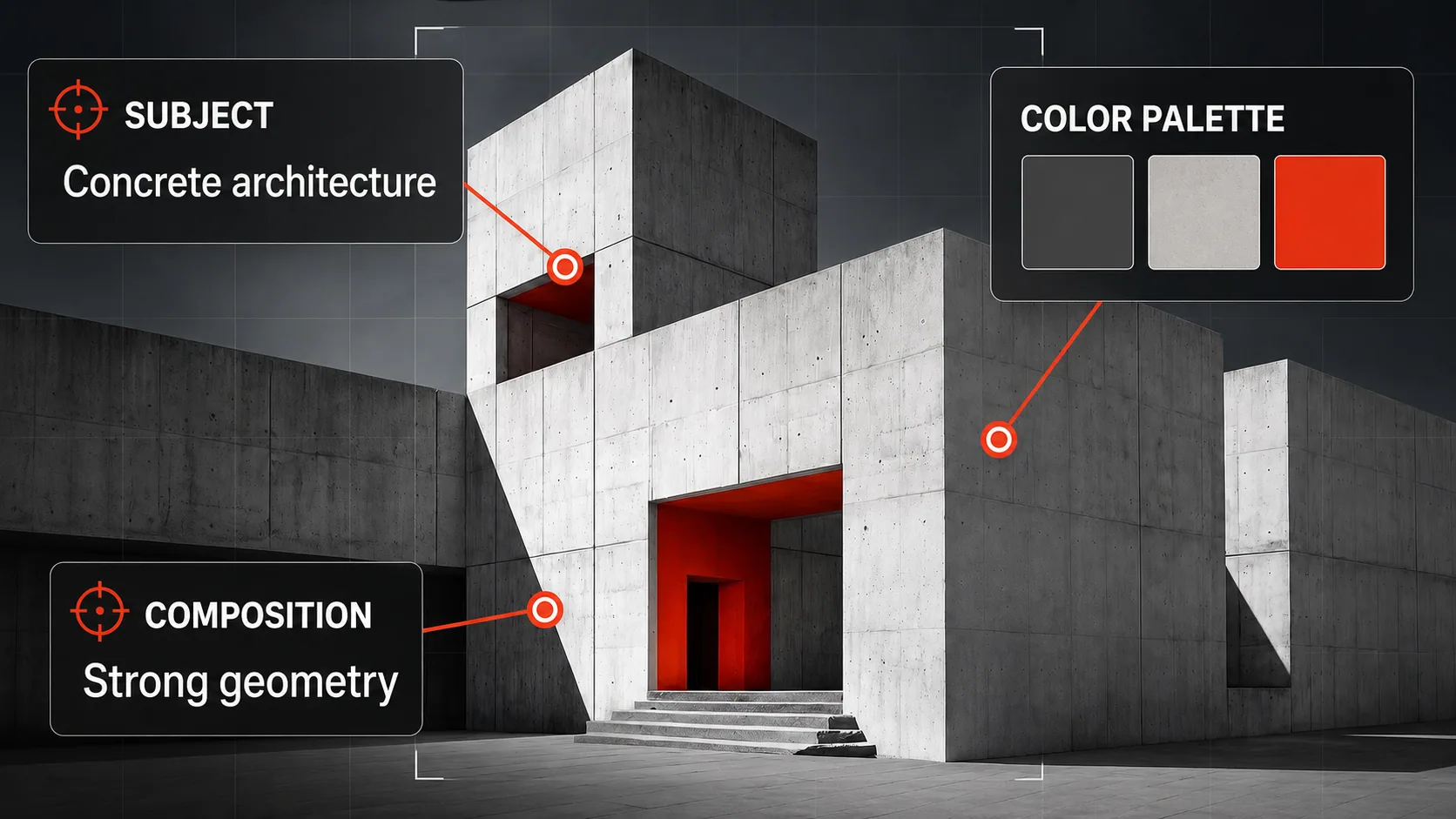
An AI image analyzer takes a picture apart the way a designer or photographer would. Upload a photo, an illustration or a render and it pulls the color palette as hex codes, then explains the composition, the lighting and the style that make it look the way it does. Use it to match a palette for a brand board, study a reference shot before your own shoot, or find the words for a look you want to recreate.
The 4 to 6 main colors as named hex codes, most prominent first. Click one to copy it into your design tool.
Framing, camera angle, balance and where your eye travels: the reasons a shot works, in words you can reuse.
Where the light comes from and how soft or hard it is, plus the medium and the look it recalls.
Built around how an image is made: color first, then composition, light, style and mood.
4 to 6 main colors as named hex codes, plus how contrast, saturation and warm or cool tones set the feel.
Framing, camera angle, perspective, depth and balance, and the path your eye takes through the frame.
The light source and its direction, hard or soft light, and what the shadows and highlights do.
The medium and technique, from photo to oil paint to 3D render, the genre, and one or two artists the look recalls.
The feeling the image gives off, and which colors, light and framing create it.
A short read of the subject and setting for context, plus 5 to 10 keywords you can use to tag or search your references.
From a reference image to its palette and structure in seconds
A PNG, JPG or WebP: a photo you admire, a design you want to match, a painting or a render.
A one-line summary and the color palette come first, then composition, lighting, style and mood, each in its own section.
Copy a hex code, paste the composition notes into a brief, or reuse the style words in your next AI prompt.
Palettes, composition, and what happens to your image.
Upload the image and the analyzer returns its 4 to 6 main colors as hex codes with plain names (for example #d97a3f, burnt orange), ordered from most to least prominent. Click any color to copy its code, or copy the whole report. Alongside the swatches it explains how the colors work together: contrast, saturation, and whether the image reads warm or cool.
Yes. The composition section covers framing, camera angle, perspective, depth and balance, where your eye travels through the frame, and principles like the rule of thirds when the image uses them. It explains what the photo is doing; it does not score the photo or suggest edits.
A describer tells you what is in a picture, in readable sentences, which is what you want for alt text or a caption. The analyzer is about how the picture is made: the palette with hex codes, the composition, the lighting, the style and the mood, each in its own section. Use the analyzer to study or match a look, and the describer to explain the content.
Yes. It is free with no daily limit and no sign up, so you can analyze a whole folder of references one after another.
Yes. The lighting, composition and style sections give you exact wording to reuse in Midjourney, Stable Diffusion or GPT Image prompts. If you would rather have a finished prompt, open Image to Prompt and upload the same image.
PNG, JPG and WebP files: photos, digital art, paintings, screenshots and 3D renders. The style section names the medium it sees, so a painting and a photo are each described in their own terms.
If you are not signed in, the image is analyzed and then discarded. If you are signed in, the report and a small thumbnail are saved to your private history so you can find them again. Images are not used to train AI models.
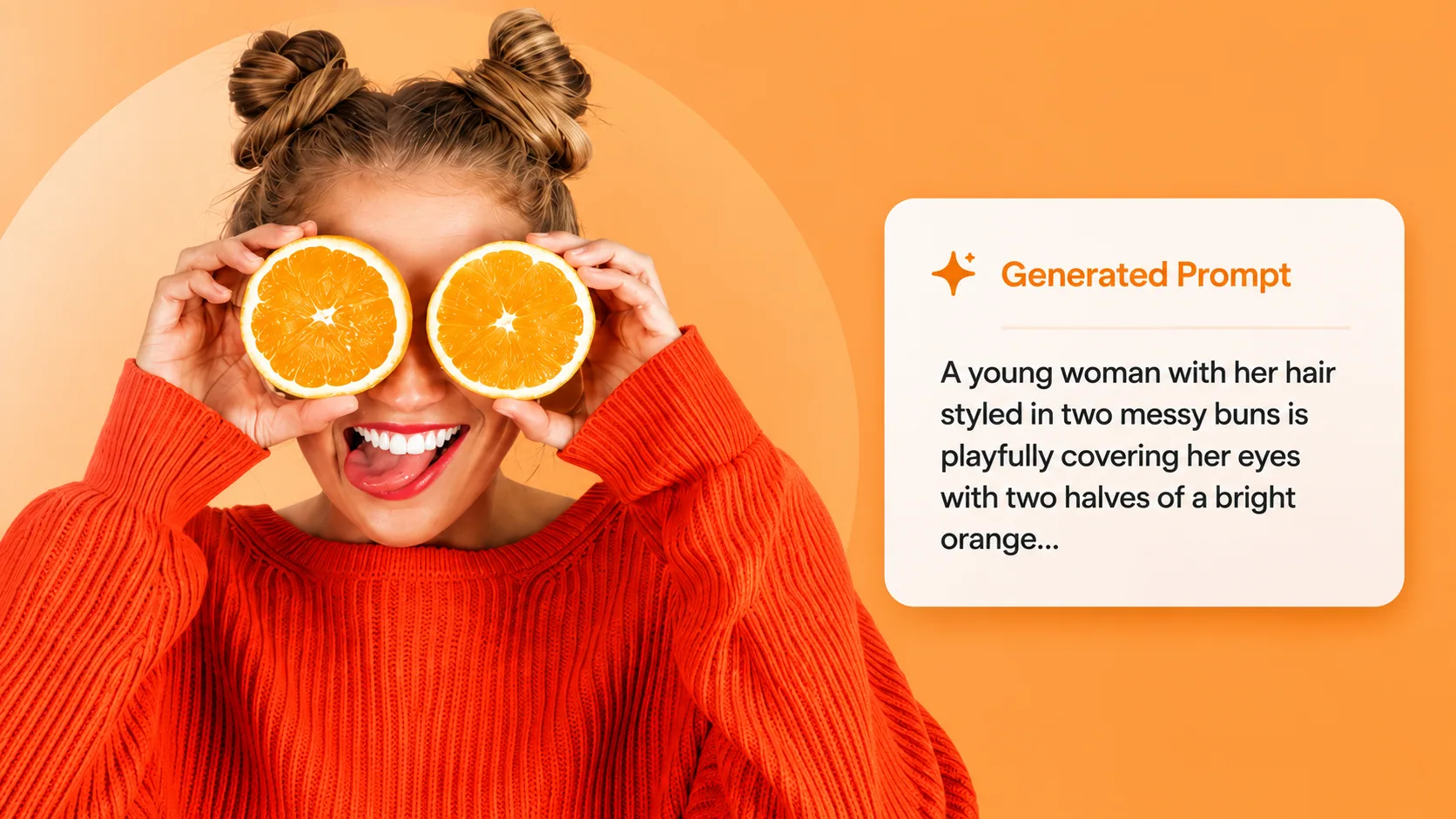
Studied the palette and light and want the same look? Get a ready prompt for Midjourney, Nano Banana or GPT Image.
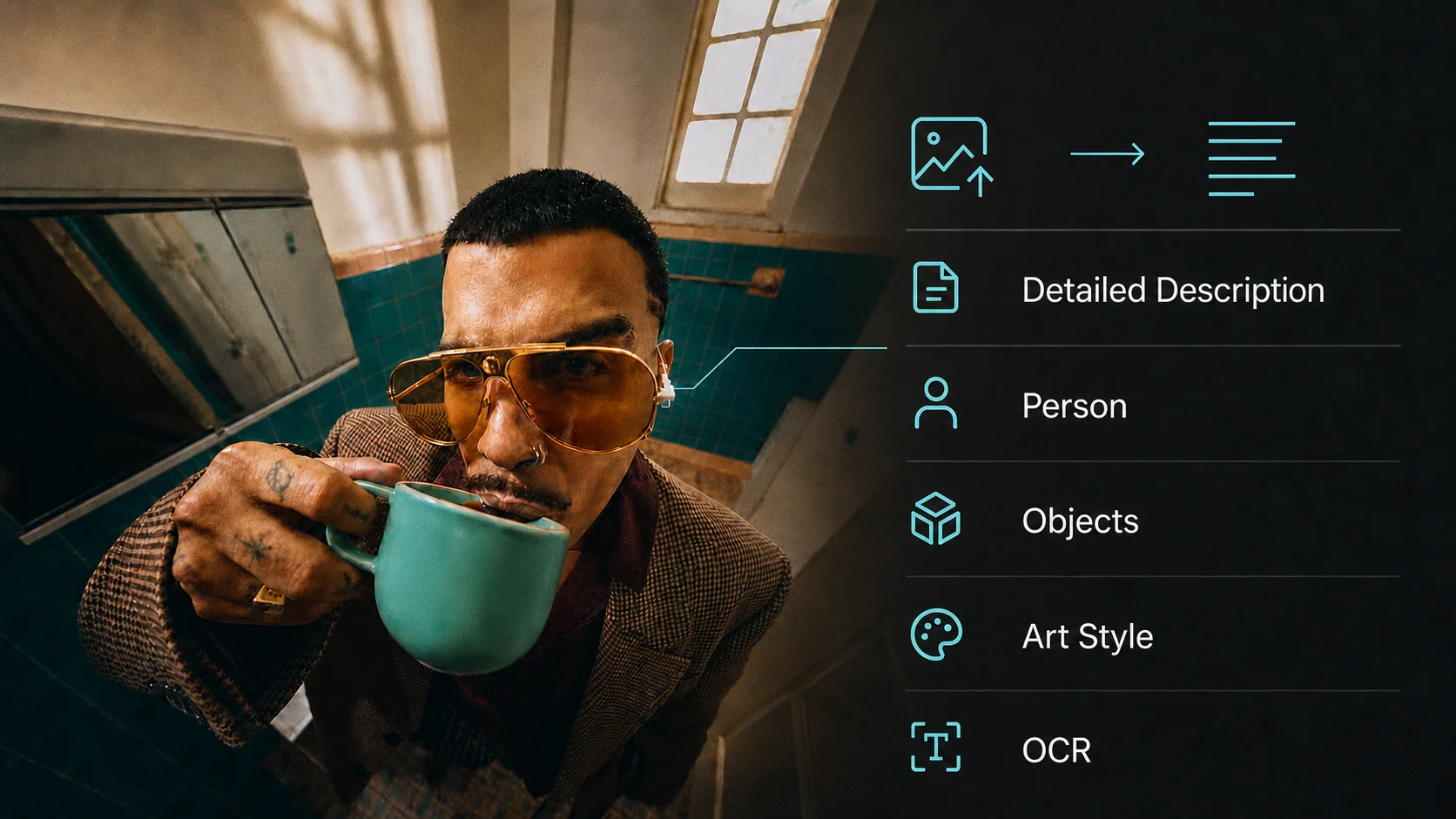
Need to say what is in the picture instead? Get alt text, a caption, or the words printed in it.

Analyzing a fashion shot? Name every garment, the hair, and the style it belongs to.
Drop in a reference and get its palette and the reasons it works. Free, no sign up.